Change a flat tire on the side of the road
Knowing the spare and jack locations ahead of time can mean a 20-minute shoulder stop instead of spending an hour calling a tow company.
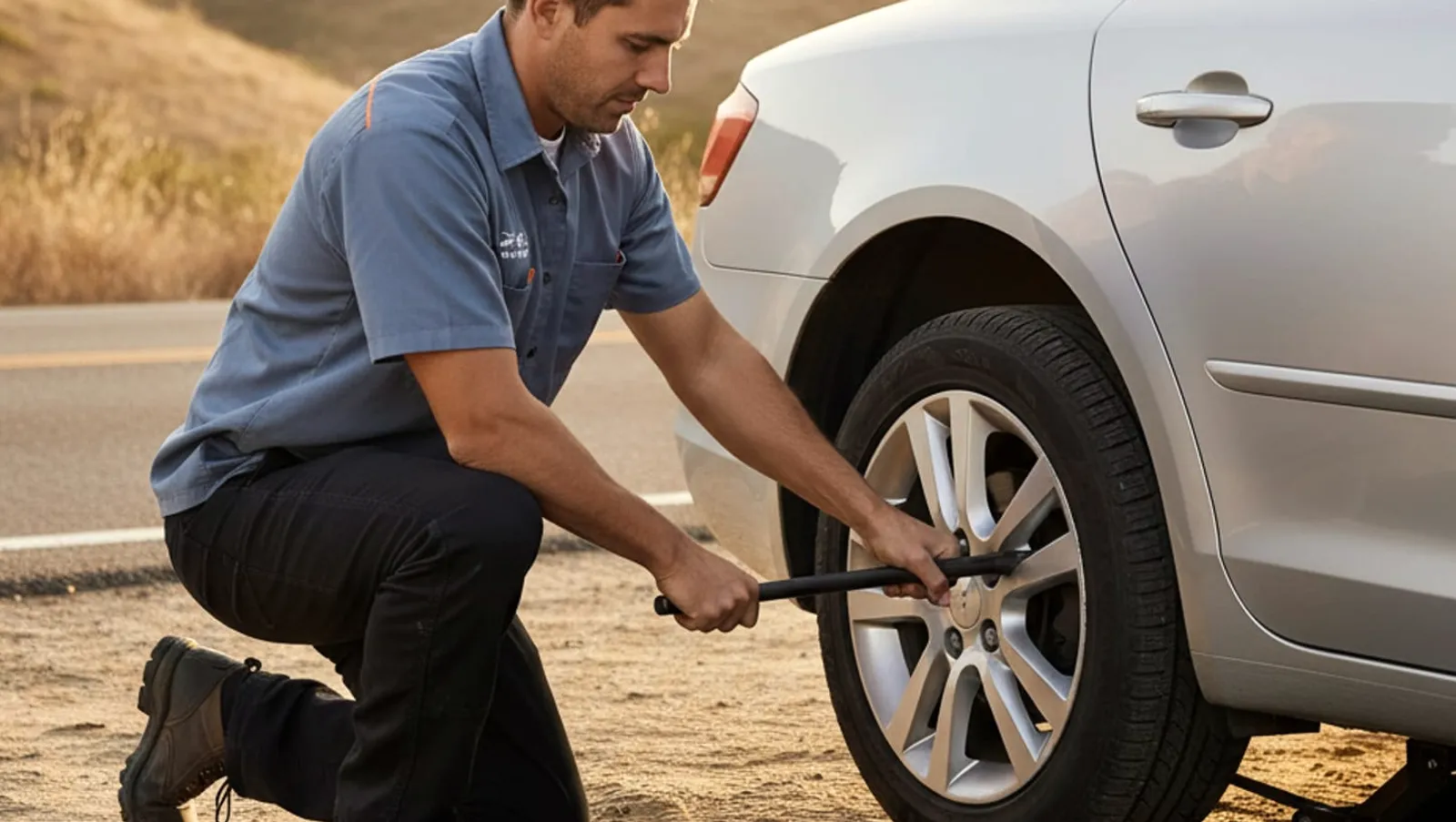
What you'll learn
- What makes the vehicle’s traffic-facing side unsafe for a DIY change
- Finding the designated lifting spot on a typical newer vehicle (refer to the owner’s manual)
- Proper lug-nut sequence (star/cross rather than circle)
- When a tow is the better option: freeway shoulders, tight curbs, or sidewall damage
Step by step
- Move to a safe, level location away from traffic and, if possible, beyond the shoulder.
- Engage the parking brake and hazard lights. Shift into park, or 1st gear for a manual.
- With the tire still touching the ground, loosen every lug nut by half a turn before raising the vehicle.
- Place the jack beneath the frame at the factory jack point. Lift until the tire clears the ground by 1-2 inches.
- Take off the lugs, replace the flat with the spare, then hand-tighten the lugs using a star pattern.
- Fully lower car, then torque lugs in the same star pattern
- Go straight to a tire shop. Most spare tires have a 50 mph maximum and a 70 mile range.
On the shoulder of I-10, I-45, Loop 610, or another busy freeway, call to be matched with an independent operator for a tow to a safe lot. Tire changes along active freeway shoulders lead to hundreds of secondary accidents each year.
Rather have a pro handle it?
At any hour, callers are matched with licensed local operators for towing and roadside help across the Houston metro.
Keep learning.
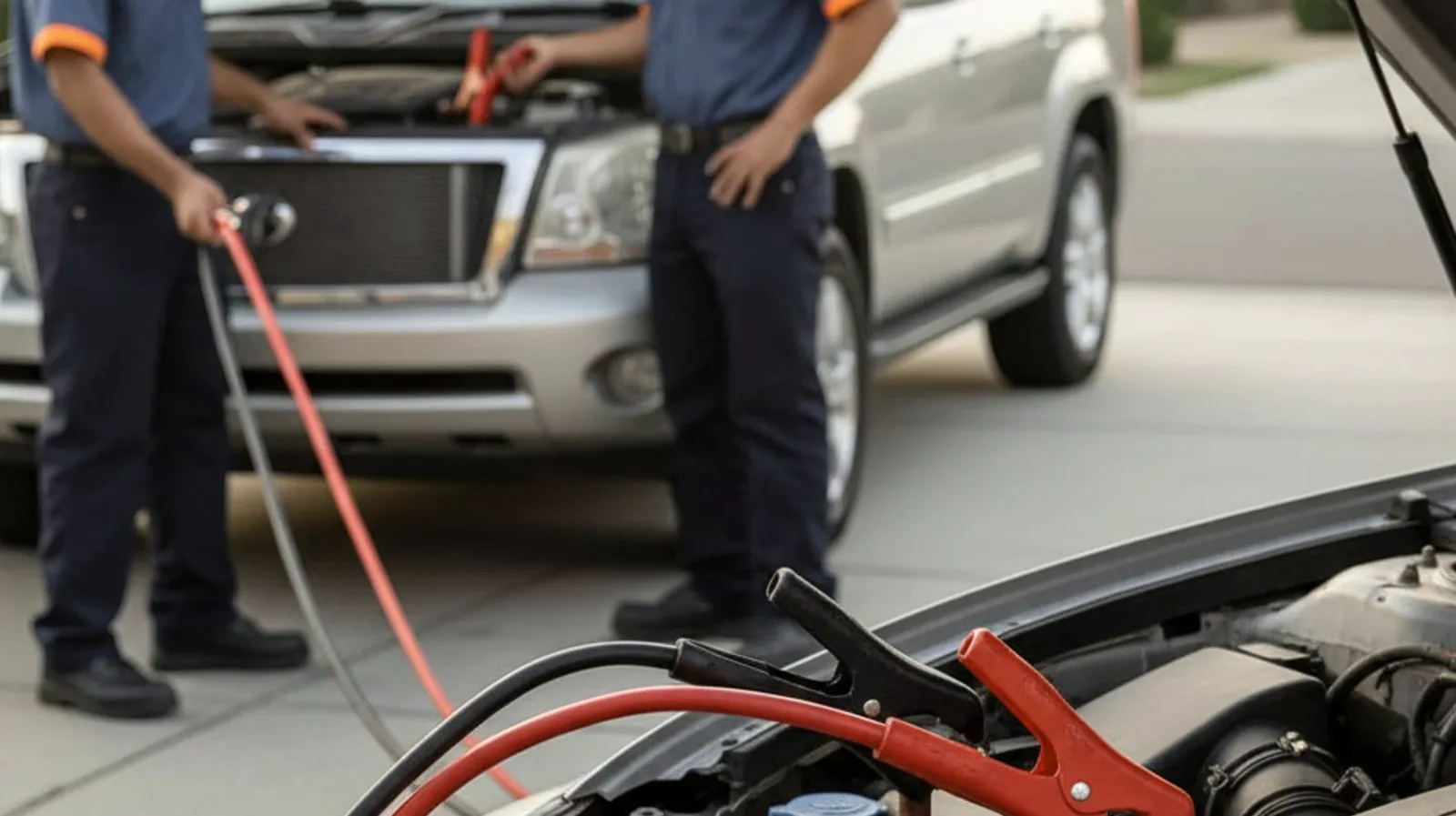
Jump-start a dead battery safely
Jumper cables seem easy until the connections are wrong. Connect them correctly to prevent sparks, damaged electronics, and an unnecessary tow.
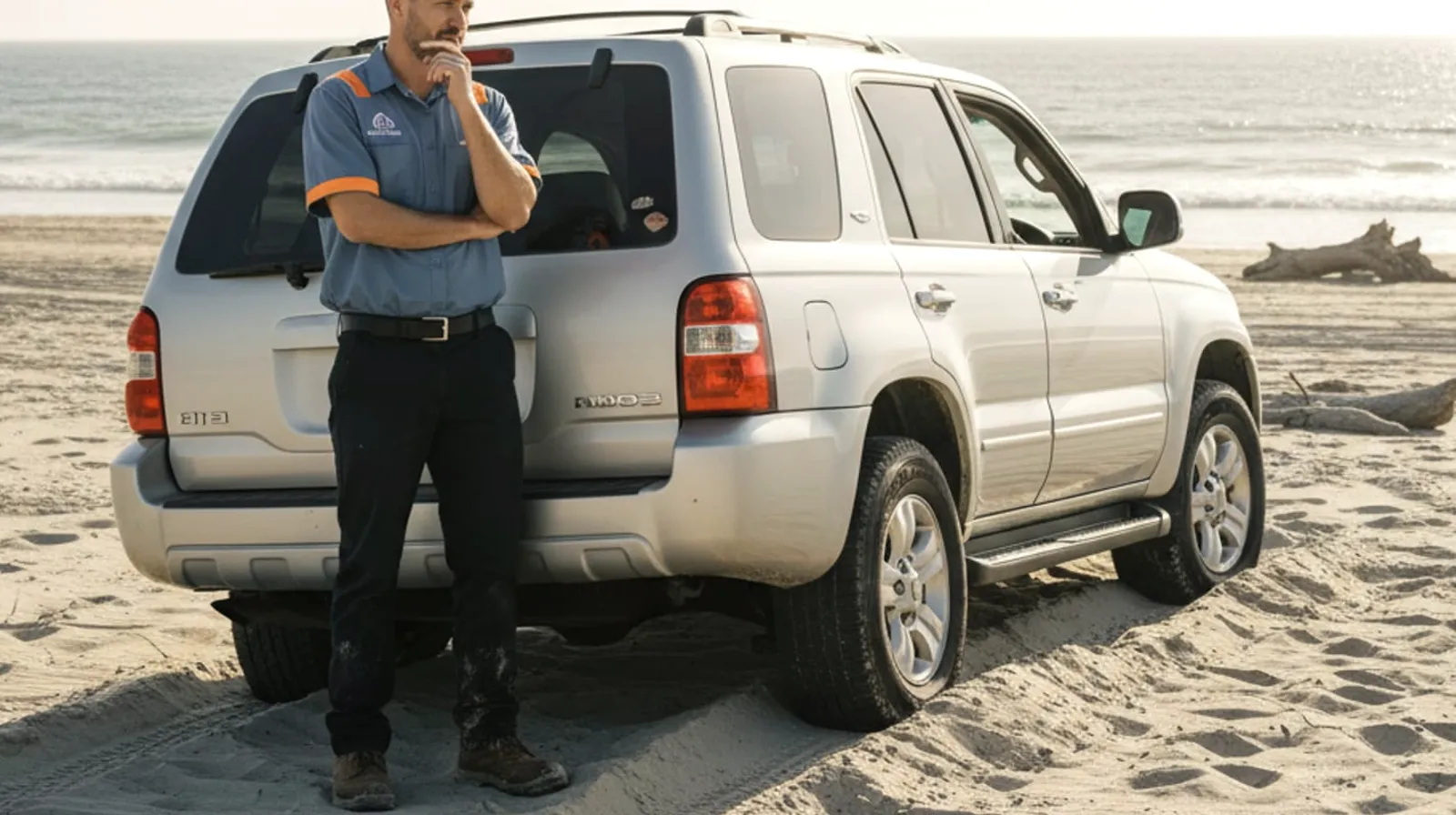
What to do when stuck in mud or high water
During heavy rain, low-lying streets, bayou crossings, and unpaved lots can quickly fill with mud and standing water. Start by not worsening the situation.

Prepare your vehicle for a tow
Preparing for a few minutes before the matched tow truck gets there reduces delays, helps prevent damage, and speeds up the call.