Can a tow truck refuse to take my car in Texas?
Yes, though only under particular circumstances set by Texas law and operator policy. Learn when an operator may decline, which rights you have, and how to respond when service is refused in Houston.
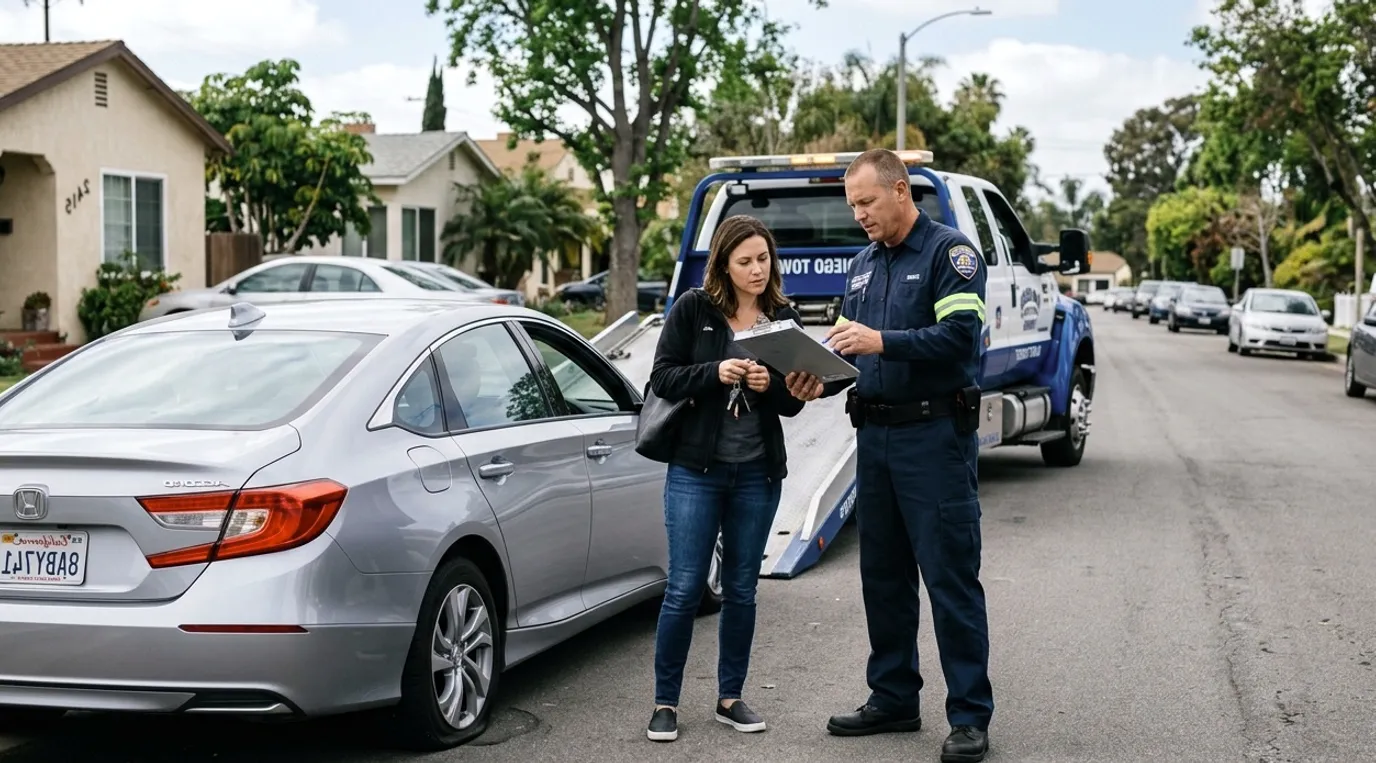
What you'll learn
- Five lawful reasons a Texas tow operator may turn down a job
- Cases where an operator MUST accept the job (insurance dispatch, police dispatch)
- What TDLR rules actually say about tow operators
- What rights you have as the vehicle owner after a refusal
- What to do next if no one will take your call
Step by step
- Reason 1 - The vehicle’s weight or dimensions are beyond the truck’s rating (e.g., using a wheel-lift truck for an RV).
- Reason 2 - Towing the vehicle would be unsafe (dangerous fluid leak, structural collapse, fire hazard).
- Reason 3 - The driver cannot confirm ownership (suspected stolen vehicle, no registration).
- Reason 4 - The site is unsafe for the operator (no safe pull-off, active hostile environment).
- Reason 5 - That vehicle type or location falls outside the operator’s service scope (e.g., a non-EV-rated operator refusing an EV).
- When acceptance is REQUIRED: scenes dispatched by police and operators sent through your own AAA or insurance request.
If an operator declines your request while you are stuck somewhere unsafe, contact 911 for an emergency or call the local non-emergency number. Officers or DPS personnel at the scene can directly request a tow operator.
In brief
A Texas tow operator may decline to move your vehicle, but the reason must come from state law, an existing contract, or the operator’s service and safety policies. Simply disliking the trip, wanting more money, or favoring another caller in the queue isn’t a valid basis for refusal. When a refusal falls outside the legitimate circumstances listed below, you can take action.
5 valid reasons a Texas tow operator may say no
- The truck isn’t safely rated for the vehicle. A light-duty wheel-lift can’t legally move a 26,000-pound box truck. The operator must either send suitable equipment or decline and direct you to a heavy-duty operator. TDLR rules say the tow truck must be capable of moving the vehicle safely.
- The vehicle presents a towing hazard. Examples include an active gasoline, brake-fluid, or hydraulic leak, structural failure, fire danger, or hazardous cargo. An operator doesn’t have to accept a vehicle that could endanger the operator, other motorists, or property.
- You can’t establish authority over the vehicle. The operator may refuse when you can’t show a driver license, registration, or another document proving that you may move it. Verification is especially important when a vehicle is reported stolen or someone wants it moved without the owner’s permission.
- The scene can’t be approached safely. An active hostile setting, lack of a safe pull-off, an unstable hillside, or a construction zone without operator access can justify refusal. The operator may wait until police escort, scene clearance, or another measure makes the location safe.
- The area or vehicle falls outside the operator’s services. An operator without EV training may turn down a Tesla. One without a flatbed may decline an AWD vehicle. An operator serving only locations inside the Loop may reject a distant request toward Katy or Baytown. The operator must tell you so that you can contact someone else.
Situations where the operator MUST accept
- Scenes assigned by police. When law enforcement orders a tow, the agency managing the scene selects the operator. At a police-controlled location, ask the officer which company has been assigned and where your vehicle is being taken.
- A dispatch from your insurer or motor club. When AAA, Geico, Allstate, USAA, or another insurer or motor club sends an operator after your earlier call, the operator has contractual obligations to that organization as well as dealings with you. Refusing the assignment can bring contract penalties.
- A current agreement covering the property. Operators under contract with an HOA, apartment complex, or commercial property must handle calls from property management according to that contract.
Important Texas towing law
Transportation Code Ch. 545 - Police authority to order towing
A Texas peace officer may have a vehicle removed without the owner’s consent in many circumstances, including when it is in a fire lane, obstructing a driveway, abandoned on a highway, connected to evidence in a crime, or left after the driver’s arrest. A tow ordered by law enforcement is legally authorized, and the assigned operator must carry it out.
Texas Occupations Code Ch. 2308 - Nonconsent towing from private property
This chapter covers removal from places such as apartment parking lots, retail centers, and HOA streets. It requires property owners to display specified signs, requires the operator to confirm the violation, and gives the vehicle owner the right to seek a tow hearing in justice of the peace court. If the property requests a tow under Ch. 2308 but the operator arrives after the violation has ended, the operator may decline without being penalized.
Pre-tow release and drop fees
Texas nonconsent-tow rules let you demand the vehicle’s release when you arrive before the operator finishes hooking it up and begins moving it. The operator may collect a drop fee established by the local fee schedule, but must let the vehicle go. Refusing release before the vehicle is fully hooked violates the rules.
Rights to a tow hearing under Occupations Code Ch. 2308
You may request a tow hearing within 14 days after the tow. File in the justice of the peace court serving the precinct from which the vehicle was removed. The hearing allows you to dispute both the tow’s authorization and the reasonableness of the towing and storage charges.
TDLR licensing for towing
The Texas Department of Licensing and Regulation licenses tow trucks, individual tow operators, and vehicle storage facilities. The carrier’s operator must have an active TDLR license and a USDOT number. Treat a driver’s refusal to provide requested licensing information as a warning sign.
Required tow-truck equipment
Under TDLR rules, a tow truck must carry the lighting, securing devices, and safety equipment needed to move a vehicle safely. If the dispatched wheel-lift reaches a vehicle that requires a flatbed, the operator can’t legally proceed with that truck and must decline and arrange the correct equipment.
Texas Property Code Ch. 70 - Liens involving stored vehicles
This chapter controls how a vehicle storage facility may dispose of a vehicle that hasn’t been claimed. Once the statutory notice period has expired without the owner claiming it, the facility may begin moving toward a lien sale. That deadline is important when you’re seeking the release of a stored vehicle.
Rights you have as a vehicle owner
- Right to learn where your vehicle is held. For a tow ordered by Houston police, use findmytowedcar.com to search by VIN or plate, or contact the HPD Towline to identify the licensed storage facility that received the vehicle.
- Right to receive an itemized written invoice. Before taking payment, the tow operator must give you a written list of the charges. It should separately show the hook fee, mileage, daily storage, and any gate fee. Don’t pay a charge that is absent from the invoice.
- Right to collect personal belongings before paying the towing bill. Texas vehicle-storage rules permit you to remove personal property, including clothing, electronics, documents, and child seats, from a stored vehicle without first settling the tow bill. You must present photo ID.
- Right to seek a tow hearing. You have 14 days after the tow to apply through the justice of the peace court for the precinct where the vehicle was removed.
- Right to reject an operator who won’t show a TDLR license. The licensing information must be provided when requested.
- Right to require a flatbed for a damaged, lowered, AWD, or electric vehicle. TDLR rules require the operator to work with equipment that is safe for the vehicle.
Steps to take after an improper refusal
- Record what happened. Note the operator’s name, TDLR license number, the truck’s license plate, the time, and the explanation given for declining the job.
- Contact another operator without delay. Tow Pro Houston can match your call with an independent operator, or you may contact another reputable operator directly.
- Call 911 or the local non-emergency number if the location is dangerous. Police or DPS personnel managing the scene can assign a tow operator themselves.
- Contact your insurer or motor club again if it sent the operator. The organization must arrange another provider, and an operator that refuses may have breached its agreement with the motor club.
- Submit a complaint to TDLR. TDLR oversees Texas tow operators. Repeated unjustified refusals may support an investigation and action against a license.
- For a Ch. 2308 property-tow disagreement, seek a hearing within 14 days. A justice of the peace decides whether the tow was permitted and whether the fees were reasonable.
Patterns found around Houston
- Predatory towing from private property. Investigations have examined some property-tow operators for practices such as removing legally parked vehicles, misrepresenting sign compliance, and imposing excessive drop fees. You may have grounds to contest the tow when the property lacks Ch. 2308-compliant signs at every entrance and within the parking area.
- Refusals involving flood zones. In heavy rain or during a named storm, an operator may decline to enter a road covered by standing water of unknown depth. That’s a proper safety decision because a truck disabled in floodwater can’t help anyone. The operator should direct you toward a location the truck can reach safely after the water recedes.
- Tows crossing county lines. Moving a vehicle from Harris County into Fort Bend, Montgomery, or Galveston County may require release through a storage facility licensed for the destination county. An operator that isn’t equipped to store or release the vehicle there may refer you to one that is.
- Chains of heavy-duty refusals. A wheel-lift operator may arrive after a box truck or RV breaks down on I-10 and then decline the job. That refusal is appropriate because the operator shouldn’t move a vehicle beyond the equipment’s capability. The operator must connect you with a heavy-duty operator or request that one be assigned. Leaving without arranging another dispatch is a violation.
- Electric-vehicle refusals. When an EV breaks down, an operator with only a wheel-lift may correctly say the equipment isn’t suitable. An EV shouldn’t be moved by wheel-lift, so the operator must direct you to someone with a flatbed. Tow Pro Houston can match callers with independent operators when another operator has declined an EV request.
Why Tow Pro Houston may decline a referral call
Calls have been declined when: (1) A vehicle had an active gasoline leak already being handled by operators at the scene. (2) The location was within an active police perimeter and clearance wasn’t available. (3) The caller had no ID or registration, and Houston police had flagged the vehicle as possibly recovered-stolen. (4) The vehicle exceeded the available operator’s gross weight rating, so the caller was matched with a heavy-duty partner instead. The reason for each declined referral is documented, explained clearly to the caller, and accompanied by a referral.
Helpful contacts for making a complaint
- Texas Department of Licensing and Regulation (TDLR) - oversees Texas tow operators and vehicle storage facilities. Its online complaint form is available at tdlr.texas.gov.
- findmytowedcar.com - lets you search by VIN or plate for a vehicle removed inside Houston city limits.
- HPD Towline - handles questions about vehicles towed on Houston police orders. Houston doesn’t operate one central city impound lot. Vehicles are delivered to the licensed vehicle storage facility (VSF) that received them.
- Harris County Attorney’s Office - Consumer Protection Division - accepts matters involving recurring predatory conduct by one operator.
- Justice of the Peace court (Harris County) - handles requests for tow hearings filed within 14 days.
Rather have a pro handle it?
At any hour, callers are matched with licensed local operators for towing and roadside help across the Houston metro.
Keep learning.
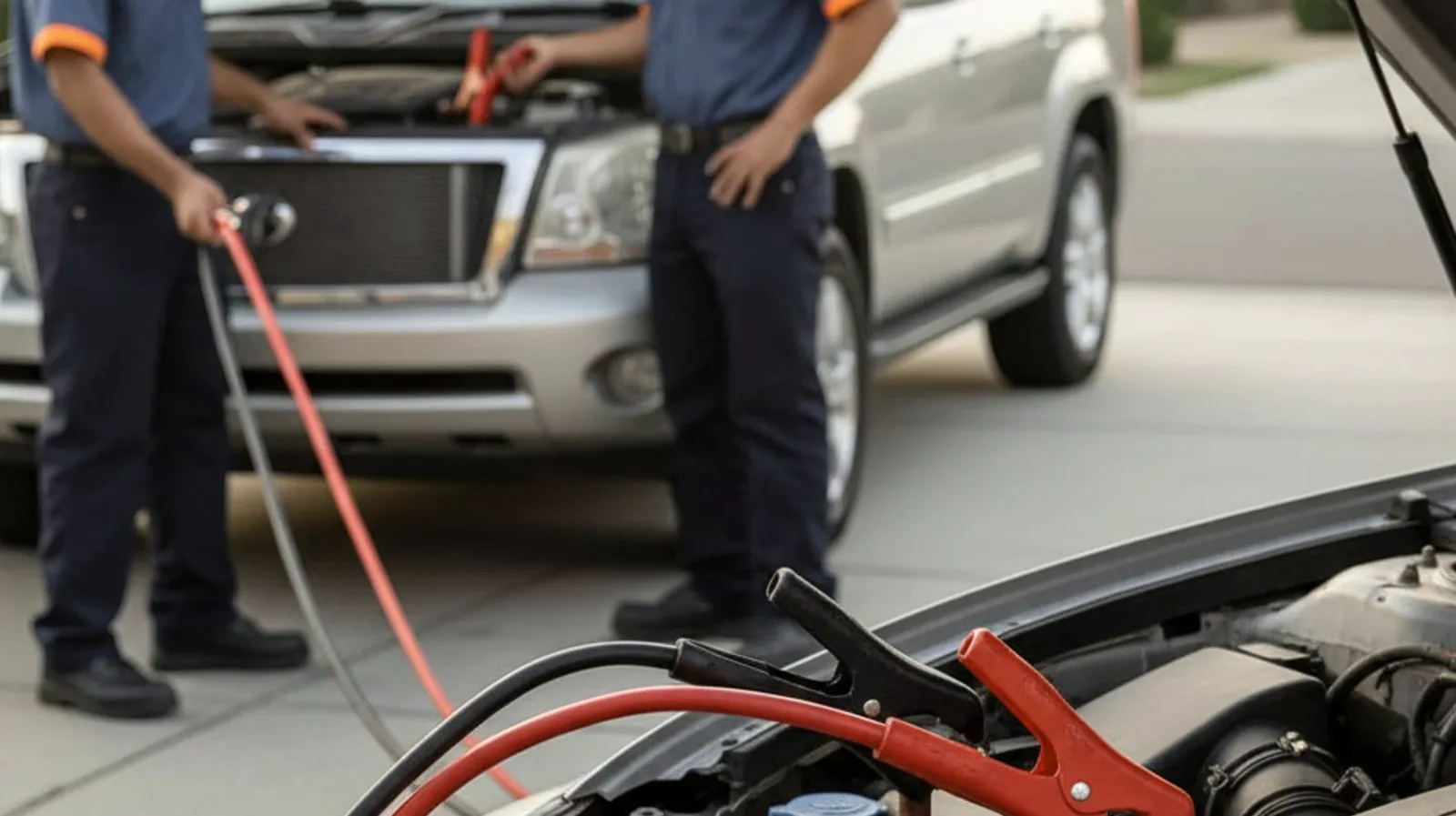
Jump-start a dead battery safely
Jumper cables seem easy until the connections are wrong. Connect them correctly to prevent sparks, damaged electronics, and an unnecessary tow.
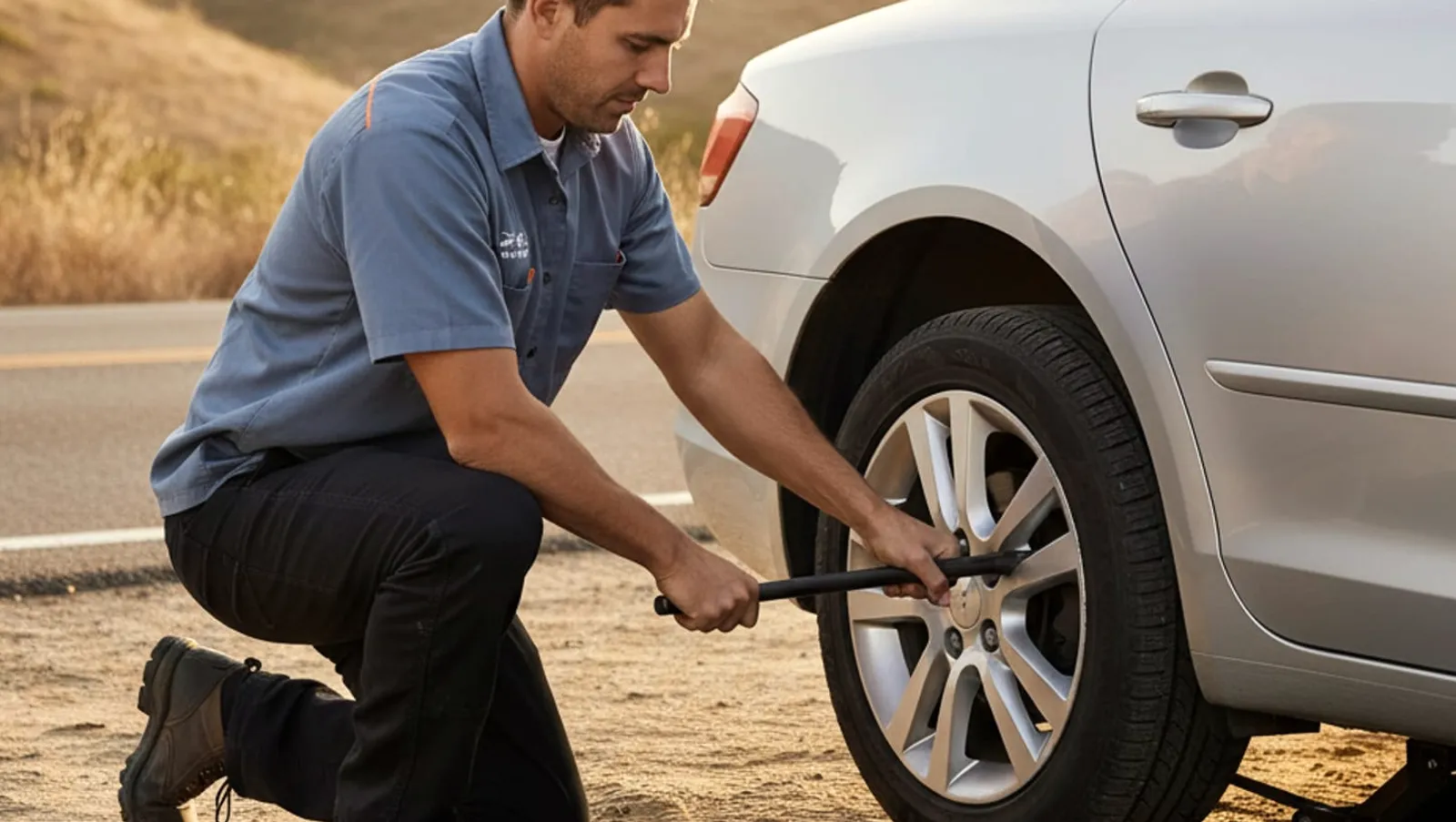
Change a flat tire on the side of the road
Knowing the spare and jack locations ahead of time can mean a 20-minute shoulder stop instead of spending an hour calling a tow company.
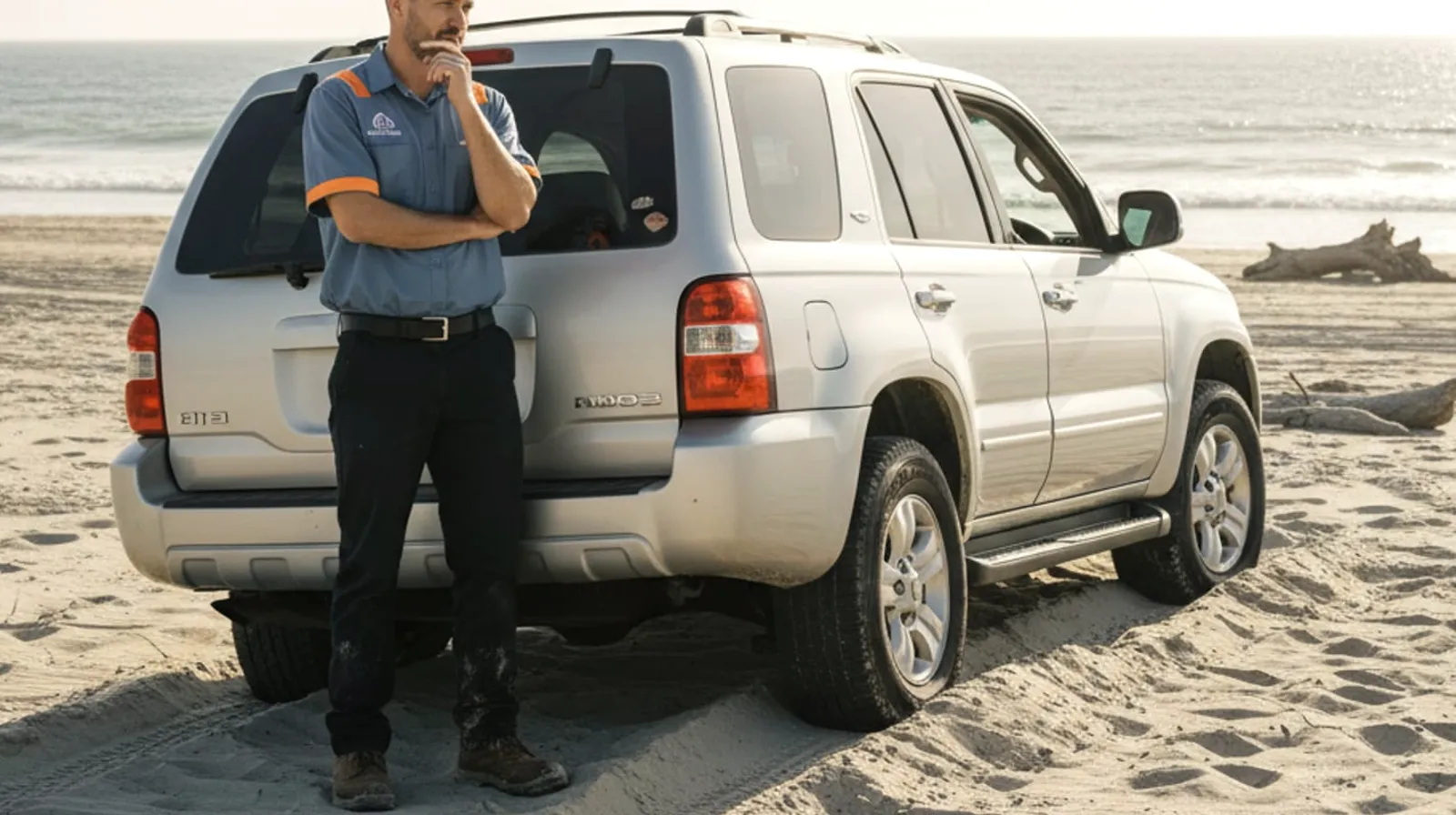
What to do when stuck in mud or high water
During heavy rain, low-lying streets, bayou crossings, and unpaved lots can quickly fill with mud and standing water. Start by not worsening the situation.