Expired registration alone isn’t confirmed as sufficient grounds for towing under the approved Texas sources available for this page. If your car disappeared, first determine who removed it, where it was parked, and what reason appears on the towing record.
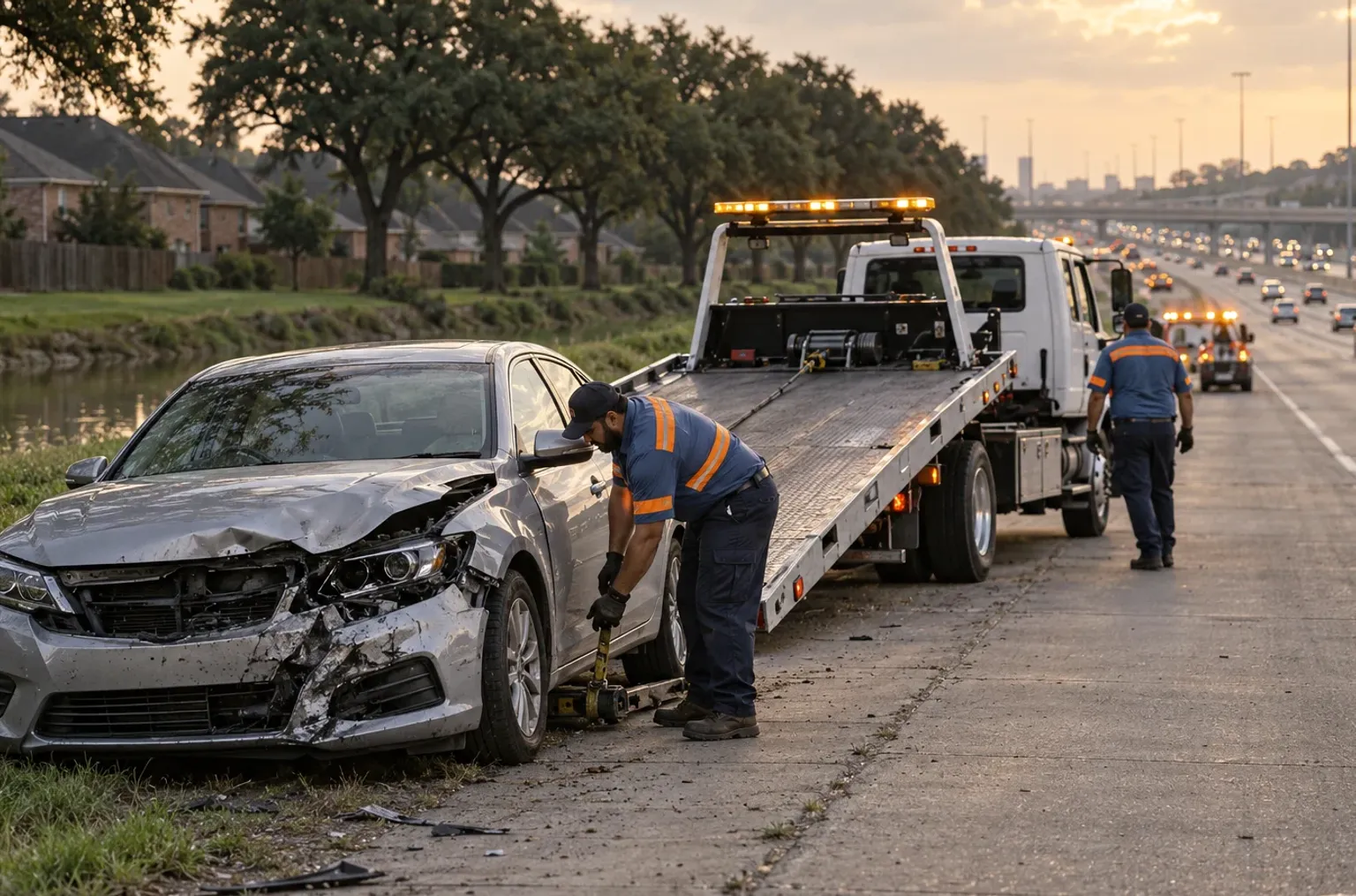
Start with where and why the vehicle was removed
The location changes which questions you should ask. A car removed from a Houston apartment lot presents different facts than one removed from a public street.
Start with the exact parking spot. Note whether it was inside Houston, elsewhere in Harris County, or in another city. Houston’s Inner Loop, Pasadena, Katy, and unincorporated Harris County don’t all use the same local process.
Look for posted towing signs near every entrance. Photograph each sign, the entrance, curb markings, your parking space, and any permit display. Save notices from the property manager. Don’t rely on memory if you may challenge the tow.
Texas law sets detailed requirements for private-property towing signs. A sign must be visible to entering drivers and permanently mounted. It must stand between five and eight feet above the ground. It also needs the international towing symbol, parking restrictions, enforcement times, and a working contact number.
The required placement depends on the entrance. Signs generally belong at each driveway or curb cut. Wider entrances have additional spacing requirements. Those details can matter during a tow hearing.
If an apartment office says expired registration caused the removal, ask for that reason in writing. Also request the parking rule or notice they relied upon. The approved claims ledger doesn’t confirm that expired registration, by itself, authorizes a Texas tow.
Tow Pro Houston doesn’t order impounds or decide whether removals are lawful. Our private-property towing service connects callers with independent operators when an authorized vehicle move is needed.
Check the notice and towing record
Houston doesn’t have one city-operated impound lot. Police and city tows go to a network of licensed private vehicle storage facilities, often called VSFs.
For a City of Houston tow, search findmytowedcar.com using the plate or VIN. The lookup is generally updated within about two hours of the tow. A recent removal may not appear immediately.
For a tow from unincorporated Harris County, use the county’s separate towing lookup. Don’t assume a Houston address means the City of Houston handled the removal. Parts of the metro use Houston mailing addresses but sit outside city limits.
Once you find the vehicle, save the facility’s name and location. Ask the VSF for the towing record and itemized charges. Then compare the stated removal reason with the notice, posted signs, and property rules.
Confirm that both the tow operator and storage facility hold current TDLR licenses. Texas requires tow operators and VSFs to be licensed by the Texas Department of Licensing and Regulation. TDLR provides a public license search.
Don’t drive to a facility until you’ve confirmed what it requires for release. The approved sources for this article don’t establish a universal document list. Ask the specific VSF what it accepts and how payment works.
Also remove needed personal property according to the facility’s process. A Texas VSF can’t charge a fee merely to let you access personal property inside the stored vehicle. Keep records of every conversation, notice, receipt, and attempted payment.
Separate registration issues from other towing reasons
A registration problem may be visible, but it may not be the recorded towing reason. Review the paperwork before deciding why the car was removed.
A private-property record might identify a parking restriction, permit issue, or another claimed violation. A public removal may involve where the vehicle was stopped, not its registration status. Don’t combine separate issues without evidence.
Texas restricts stopping on the main traveled portion of a highway outside business or residential districts. A vehicle generally must leave a clear passing lane and remain visible from both directions when pulling off isn’t practical. Disabled vehicles receive an exception under the approved Texas rule.
That distinction matters on Houston roads. A removal from I-45, Loop 610, or I-10 isn’t the same situation as a car parked at a Spring Branch apartment. Freeway safety, private parking rules, and registration enforcement involve different records and decision-makers.
Houston’s Tow and Go program may move an attended, disabled vehicle from an eligible freeway to a safe nearby location. The program excludes tollways and the Katy Freeway HOT lanes. It also requires authorization from law enforcement or Houston TranStar. You can review the program at Houston Tow and Go.
Ask one direct question: “What exact reason is listed for this tow?” If the answer mentions expired registration, request the document supporting that statement. If another reason appears, address that reason separately.
A citation and a towing charge are also separate matters. The approved claims ledger doesn’t confirm the amount of an expired-registration citation. Check the citation itself and contact the court identified on it for the current amount and options.
Confirm the current Texas rule
The approved Texas claims available here don’t confirm that expired registration alone permits towing. They also don’t confirm that it can never contribute to a removal. That answer depends on the documented circumstances and the current rule applied by the responsible authority.
For current statewide towing guidance, check TDLR’s towing consumer information. For current registration requirements, consult the Texas agency administering vehicle registration. Don’t rely on an old article, social post, or rule from another state.
This is especially important for registration stickers. The approved ledger doesn’t answer whether a particular sticker must appear in 2026. Confirm the current requirement directly with the state before renewing, disputing a citation, or retrieving the vehicle.
The ledger does confirm several Texas consumer protections. A driver whose vehicle was towed or booted without consent is entitled to a hearing on whether probable cause existed. The written request must reach the appropriate court before the 14th day after removal, excluding weekends and holidays.
That clock begins only after the tower or VSF provides the information needed to file. The hearing takes place in a justice court within the county where the vehicle was removed.
Sign problems can be raised during that hearing. Save clear photos showing every entrance and sign. Record when each photo was taken. Keep your lease, parking addenda, permit information, tow notice, and receipts together.
Don’t delay while debating the registration question. Storage charges can continue while the vehicle remains at the VSF. The approved claims ledger doesn’t confirm how releasing the car affects the tow-hearing process. Ask the appropriate justice court before you act.
Choose the next call after checking the facts
Your next call depends on what the record shows. If the vehicle appears in Houston’s lookup, contact the listed VSF. Ask what reason was recorded, what release requirements apply, and which charges have accrued.
If the tow came from an apartment, commercial lot, or other private property, contact the property representative too. Request the applicable parking rule and any authorization or notice connected with the removal. Keep the conversation factual.
For a disputed non-consent tow, obtain the information needed for a hearing. The filing deadline is short, so identify the correct justice court promptly. The court must be in the county where the tow occurred.
Confirm every government-regulated charge against the right authority. For private-property non-consent tows across Texas, TDLR publishes statewide maximums. The approved caps are $272 for vehicles weighing 10,000 pounds or less, $380 for vehicles from 10,001 through 24,999 pounds, and $489 per unit for heavier vehicles, with a $978 maximum. These are government caps, not Tow Pro Houston prices.
TDLR also permits a one-time $50 notification fee. Approved VSF storage rates are $22.85 per day for vehicles measuring 25 feet or less and $39.99 per day for longer vehicles. Storage begins six hours after arrival. Those figures took effect January 1, 2024, so confirm the current schedule with TDLR.
Inside the City of Houston, the approved municipal light-duty non-consent rate is $232 for the first 20 miles, then $4.64 per mile beyond 20. It took effect January 1, 2026. The city adjusts that rate each January, so confirm it before paying.
If you only need a voluntary tow after release, ask the dispatched operator for pricing before the truck rolls. The operator sets that price. Tow Pro Houston doesn’t set towing or storage charges.
When to call us
Call when your released vehicle can’t be driven safely, or when you need an operator for an authorized private-property move. Call us at (346) 443-5499 and we’ll connect you with an operator who handles this work.